Ten interesting rhino facts
BY: Tasneem Johnson-Dollie
Can you name ten interesting rhino facts that don’t have to do with rhino species’ endangered statuses? Well, we’ve got you covered.
Rhinos have been in the spotlight for years because of their declining numbers and vulnerability to poaching.
But we’re starting to see some rhino population numbers rising, and there are lots of interesting facts about rhinos that can help you get to know more about these creatures, and even inspire you to get involved in working with them.
Here are ten rhino facts that make rhinos fascinating in our book.
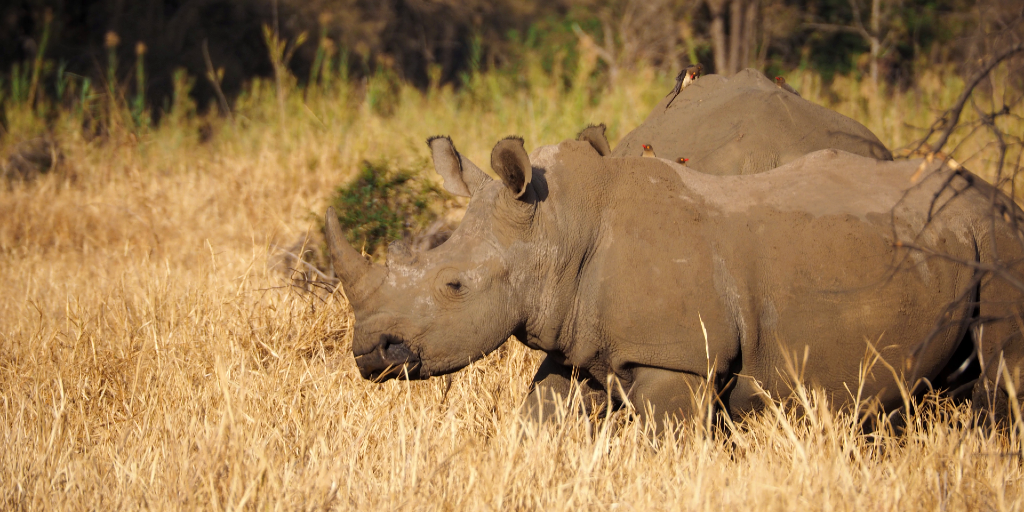
1) There are five species of rhinos and many different rhino habitats
The five rhino species are found across Africa and Asia, and rhino habitats include deserts, grasslands, savannah, shrublands and forests.
Asia is home to three rhino species, namely:
-
the greater one-horned rhino (Rhinoceros unicornis)
-
the Javan rhino (Rhinoceros sondaicus)
-
the Sumatran rhino (Dicerorhinus sumatrensis).
African rhino species are generally heavier and bigger in size than their Asian counterparts. African rhino species include:
-
the black rhino (Diceros bicornis)
-
the white rhino (Ceratotherium simum) – which includes the northern white rhinoceros and southern white rhinoceros subspecies.
2) Black and white rhinos are the same colour
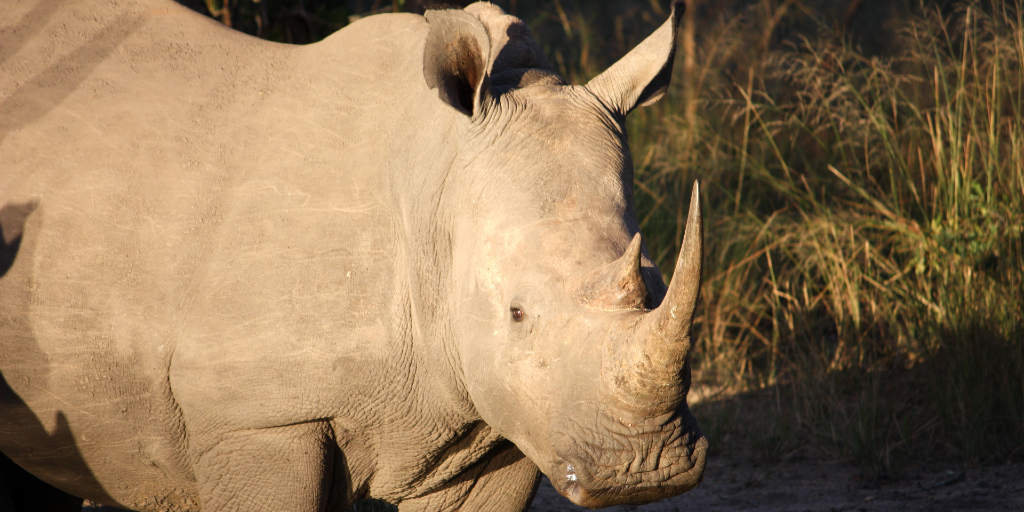
Both black and white rhino species are a very similar colour – their skin is steely gray.
The most noticeable differences between these two African rhino species are actually their size and the shape of their upper lip. White rhino species are much larger than black rhinos. And, the black rhino has a pointed (sometimes referred to as a hooked) upper lip, while the white rhino has a square-shaped upper lip.
On closer inspection, you’ll also see that the white rhino species has a longer skull and a less-defined forehead.
3) They have interesting (and hilarious) ways of communicating
We’ve all heard about animals using noises or smells to communicate with each other. But one of the most interesting facts about rhinos is that these creatures put a humorous spin on their methods of communication.
Rhinos mainly use honking, sneezing and pooping as means of communication.
They’ll make different noises depending on their mood. For example, a relaxed rhino will honk; an angry rhino will snort, growl or make a trumpet-like noise; a scared rhino will scream; and a rhino wanting to warn others of danger will sneeze loudly.
Scientists are also finding out more and more about how rhinos communicate through their poop. Studies on rhino dung in South Africa have shown that different dung piles contain different chemicals, and the smells these chemicals give off are in fact a message for other rhinos.

4) Rhinos have poor vision
Rhinos have very poor eyesight. How bad is it? Well, it’s said that a rhino can’t see a motionless human standing 30 metres away from it.
Imagine how difficult this makes it to find food, stay with its herd, or defend itself.
The good news is rhinos have strongly-developed senses of smell and hearing, which makes moving around so much easier. In fact, because they rely so heavily on their sense of smell, the largest part of a rhino’s brain is dedicated to it.
5) Rhinos are the second-largest land mammals in the world
After elephants, rhinos are the second-largest land mammals on Earth. And this rhino fact is made so much more impressive when you consider that all their bulk comes from eating vegetation.
Carnivores and omnivores get tons of energy from the meat, insects and vegetation they eat, which makes it easier for them to grow large.
But as herbivores, rhinos’ diets (which consist mainly of plants) offer much less energy for growth. This means that rhinos need to eat tons of plant material every day to achieve the growth that they do, and rhino habitats are miraculously able to provide all the plant matter that rhino species need.

6) What’s a group of rhinos called?
Of all the interesting rhino facts you’ll learn, this may be the most satisfying. A group of rhinos is called a crash!
Many species of rhino live solitary lives, but they will sometimes form groups. For instance, female rhinos may form crashes with their young and other female-offspring groups while they’re raising their young.
7) Despite their size, rhinos are speed machines
Don’t let their poor vision and bulky build fool you. If you happen to be in a rhino habitat, you best be wearing your running shoes.
Rhinos are speed machines that can run at over 60 kilometres per hour. And, it’s not just their speed that’s impressive, they also accelerate at a neck-breaking pace. Rhinos can reach their top speed within just a few strides!
Because of their acceleration and speed, rhinos are faster than both elephants and hippos, and are considered the fastest of all the land mammals weighing over 1,000 kilograms.
8) Rhinos can swim
Yes, it’s a rhino fact, all species of rhino are actually capable of swimming! But, the Asian rhino is much better at swimming than its African cousin.
The greater one-horned rhino is perhaps the best swimmer of all rhino species.
Asian rhino species can cross bodies of water with ease, dive into water and even feed underwater.
9) The Sumatran rhino is the closest relative to an extinct species of rhino
Woolly rhinos are an ancient rhino species known to have lived in the Ice Age around 2.4 million years ago.
Woolly rhinos earned their name because researchers noted their hairy (or woolly) skin as being one of the most distinctive features after examining the remains of this extinct species of rhino.
Sumatran rhinos are the only rhino species alive today that are also covered in hair and they’re considered the extinct woolly rhino’s closest living relative.
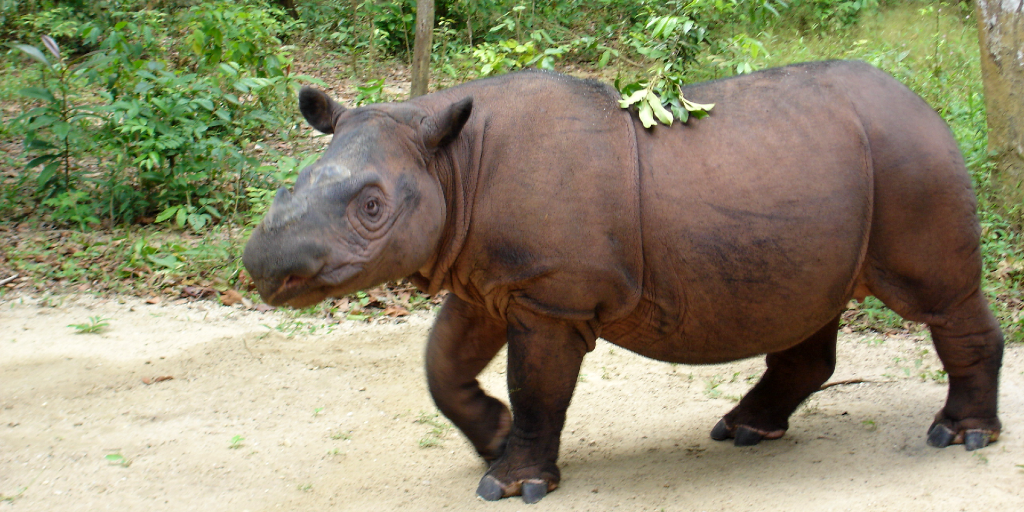
Original image: “File:Sumatran Rhinoceros at Sumatran Rhino Sanctuary Lampung Indonesia 2013.JPG” by 26Isabella is licensed under CC BY-SA 3.0
10) Why are rhinos important?
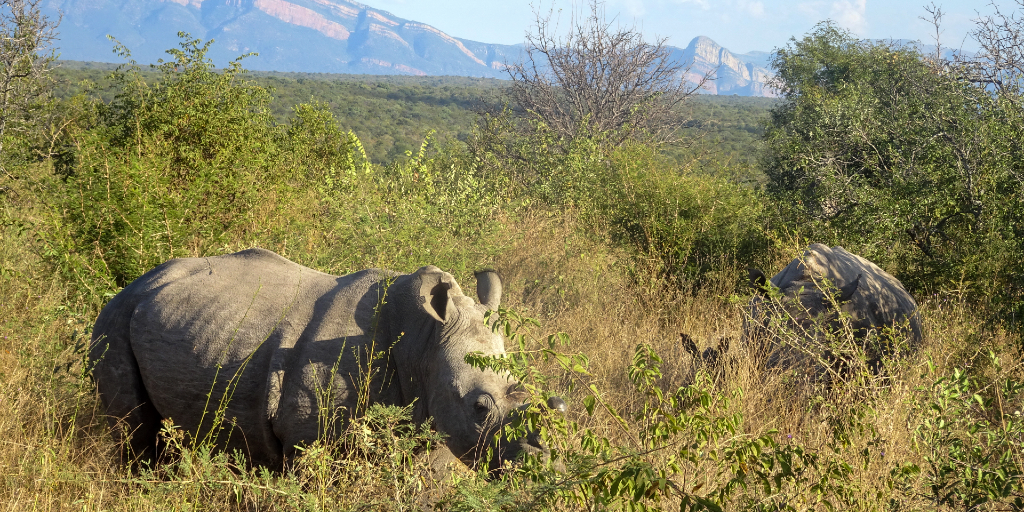
Rhinos are some of the largest animals found in wild ecosystems, and rhino habitats include an array of natural spaces – from deserts and subtropical grasslands, to tropical forests and shrublands.
This means rhinos can have a huge impact on the ecosystems they live in.
Because of this, rhinos are considered keystone species – a species whose presence in an ecosystem plays a major role in maintaining that ecosystem.
As a megaherbivore – a large herbivore that eats significant amounts of vegetation – rhino species are capable of shaping the natural environments they live in. This adds to the well-being of the plants and animals in these environments. How?
-
By clearing certain vegetation, rhinos create pathways that allow other animals to move through the area. Clearing vegetation also allows sunlight to reach otherwise shaded areas, which contributes to the growth of smaller plants.
-
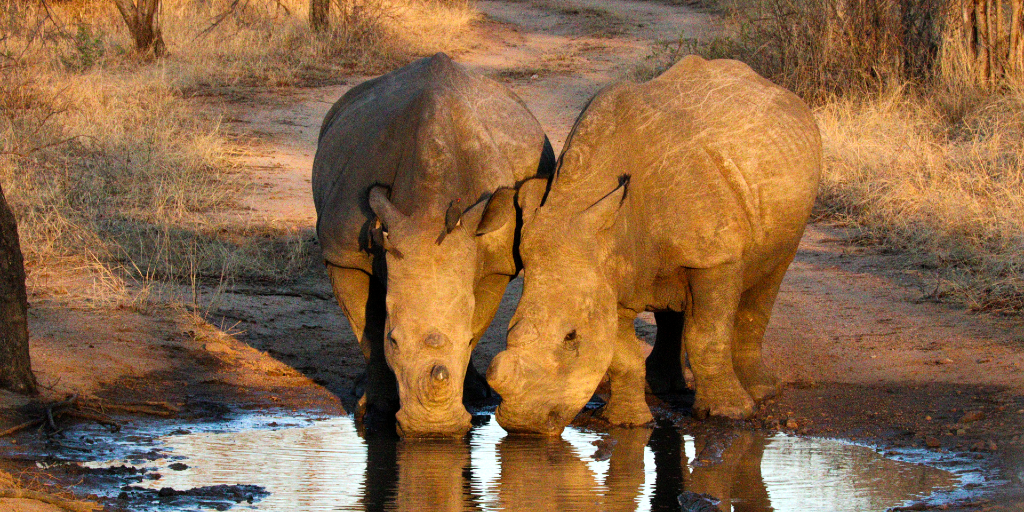
While wallowing in mud puddles, rhinos help to form natural water holes that rhinos and other animals can benefit from.
-
Rhinos transfer the mud from wallow holes to other areas of rhino habitats. In this way, they add to the fertility of these natural spaces. Rhinos also add to soil fertility and plant propagation through their dung which is rich in nutrients and plant seeds.
Why rhino conservation matters
With all these interesting rhino facts laid out, it’s clear to see that there’s so much to learn about rhino species.
But, despite their spunk and silliness, conservation-related rhino facts are still the most frequently cited. Why is this?
Well, many rhino conservation organisations have contributed to the well-being of rhinos in a big way, and some species of rhino have a much better conservation status now than they did ten years ago.
For example, the black rhino population has gone from 2,410 individuals in 1995 to over 5,000 individuals today. The greater one-horned rhino population has grown from less than 200 individuals in the 1900s to 3,588 individuals today. And, the southern white rhino recovered from near extinction with only 100 individuals left in the 1900s to a population of over 17,000 today!
However, population numbers for some of the Asian rhino species, as well as the northern white rhino subspecies, haven’t seen as much progress.
Here are some rhino conservation statistics according to the International Union for the Conservation of Nature (IUCN):
-
There are only two female northern white rhinos left on Earth.
-
Javan rhinos are critically endangered, with only 74 rhinos remaining in one rhino habitat in Ujung Kulon National Park.
-
There are less than 80 Sumatran rhinos alive today and this species is considered critically endangered.
-
Despite bouncing back from significantly low population numbers, the black rhino is still considered critically endangered.
So, now that you’ve learned interesting facts about rhinos, are you inspired to get involved in conservation activities aimed at their well-being?

This image was taken pre-Covid-19.
How you can learn more about rhino conservation
By adding to your knowledge about rhino species, rhino habitats and rhino conservation, you can build on your own understanding of the challenges facing these creatures and add to the awareness of those around you.
Bushwise Field Guides offers courses where you can learn more about rhinos online or in a rhino habitat in Africa.
Find out more about our in-country courses and internships, or browse our online programs and get started on learning even more interesting rhino facts.