A Nature Nerd’s Paradise
By: Callum Evans
Callum, a Bushwise graduate, looks back on all the weird and wonderful, small and elusive animals he spotted during his time with Bushwise Field Guides.
When I arrived at Bushwise for the Bushwise IFGA Safari Guide course, I was prepared to see a decent amount of animals and plants. But during my time there, I was completely blown away by the sheer diversity of life that I encountered.
With the Greater Kruger National Park being famous for large and iconic mammal species, smaller life can be overlooked. From butterflies to frogs to birds, the bushveld really is a nature nerd’s paradise.
Birds in paradise
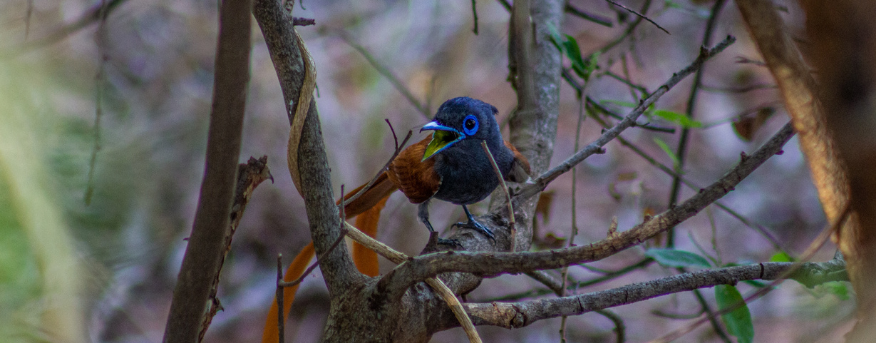
Photo by: Callum Evans
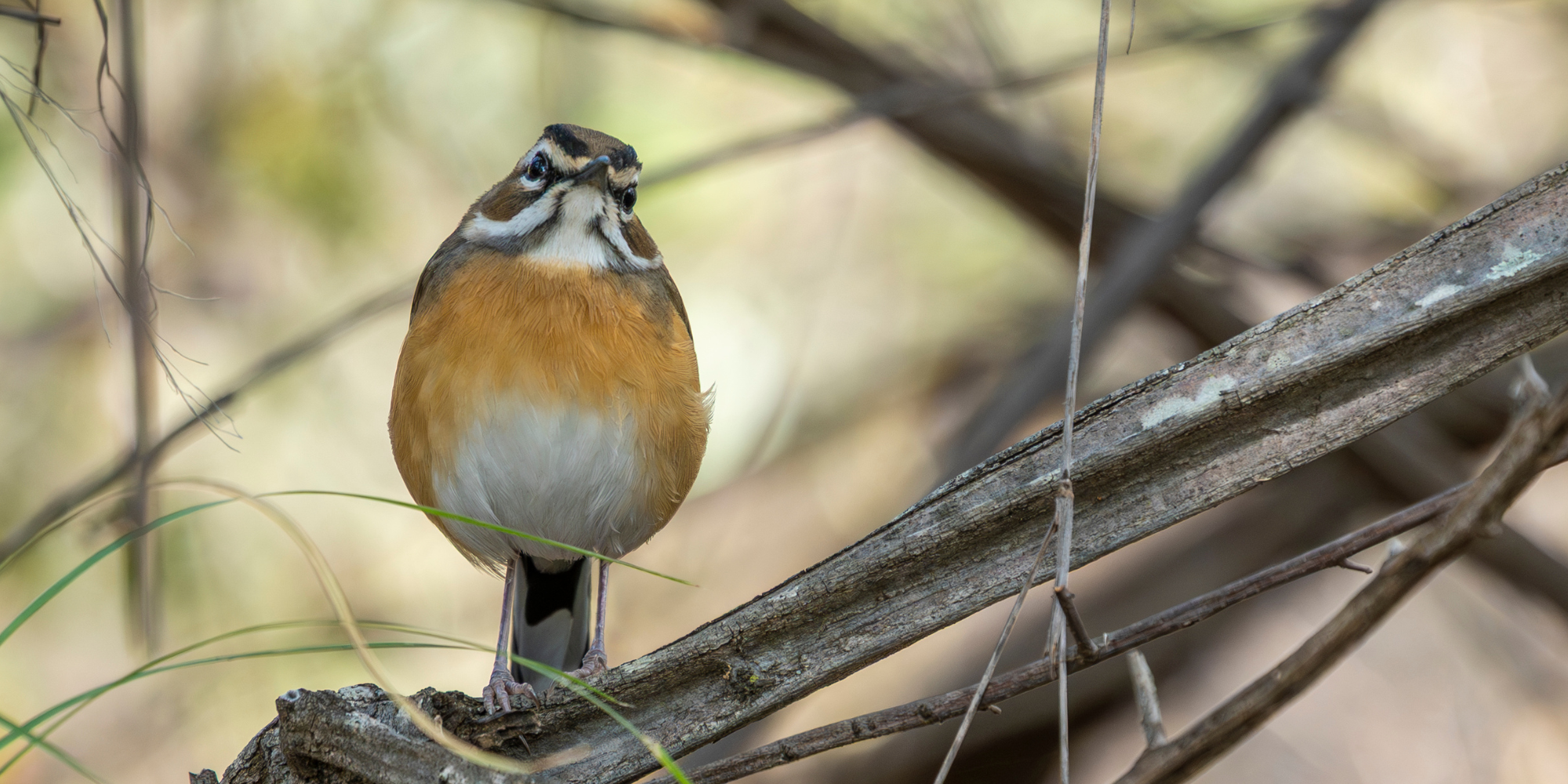
As a keen birder, I was very excited to look for birds in this area and it definitely exceeded my expectations. Within five months I recorded 180 bird species. This included 15 I had never seen before, like yellow-bellied greenbuls, Retz’s helmet-shrikes and ashy flycatcher.
Perhaps the most exciting part about birding is the chance to find a bird party, with multiple species moving together feeding off the same food source. Here you’ll see chinspot batis, southern black tit, black-backed puffback, long-billed crombec and red-billed hornbill.
The large iconic birds like a saddle-billed stork, martial eagle, bateleur, and white-backed vulture are always thrilling to see. I was also lucky enough to spot southern ground hornbill and kori bustard in Kruger.
In December, the migrant species arrived, including broad-billed rollers, violet-backed starlings, Levaillant’s cuckoo, European bee-eaters, and red-chested and diderik cuckoos. Then the iconic woodland kingfisher joined the summer symphony.
Chorus of frogs
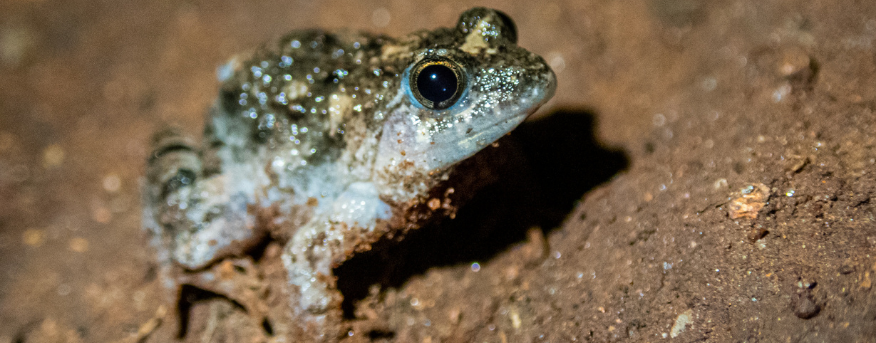
Photo by: Callum Evans
Frogs fast became a passion of mine thanks to Bushwise Field Guides. Throughout the Field Guide Training course, southern foam nest frogs and red toads were regular visitors to our rooms. Then the rains brought some really exciting new frogs and soon, the dam came alive with a cacophony of different species.
Bushveld rain frogs moved through campus at night and the reeds were dominated by brown-backed tree-frogs and broad-banded grass frogs. The tiny bubbling kassina was harder to spot but its call was very distinctive nonetheless. I even spotted an African bullfrog near campus. Ornate frogs were breeding and banded rubber frogs emerged.
Elusive reptiles
It was harder to spot the reptile species here. However, slowly but surely, I was able to see a number of species, especially the striped and rainbow skinks, and the Turner’s thick-toed and Wahlberg’s geckos.
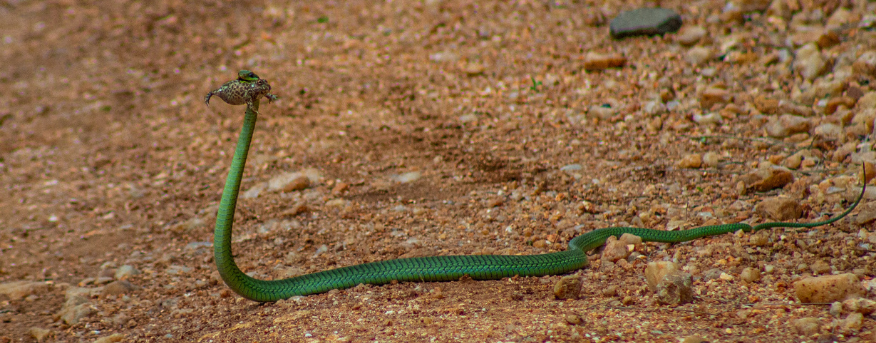
Photo by: Callum Evans
Small bushveld and spotted sand lizards were very skittish, shooting away as soon as we approached. The larger species of lizard, like rock monitors, were more visible with the rains. Water monitors prefered to hide around water sources and giant plated lizards could at times be seen basking on rocky outcrops.
The rains also triggered leopard tortoises to start moving around, while marsh terrapins are present in almost every body of water. Nile crocodiles were perhaps the most easily seen reptile, while snakes were the hardest to see.
I personally only encountered four snake species in the area. This included two Mozambique spitting cobras, two small puff adders and a tiny stiletto snake. I was also extremely lucky to watch a large boomslang catch and swallow an ornate frog.
Insects and arthropods abound
Out of all the animals, it is the insects and other arthropods that truly make an ecosystem work. In particular, after the rains, beetles could be found everywhere. Giant longhorns and ground beetles walked all over the place, especially at night. As the course went on, more and more dung beetles appeared.
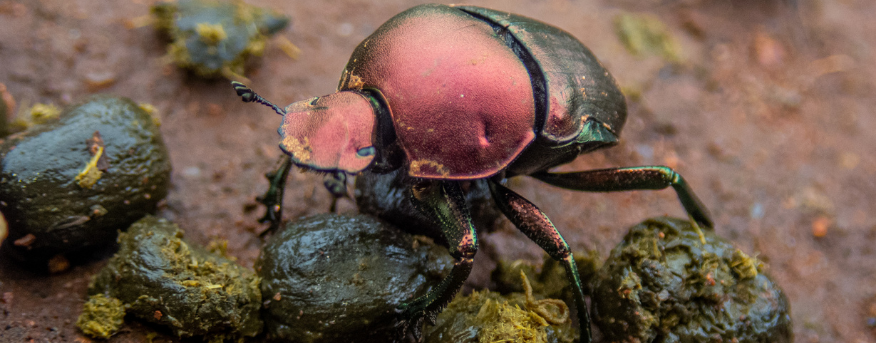
Photo by: Callum Evans
Perhaps the most bizarre one I saw was an ant’s guest beetle, with large and bizarrely structured antennae shaped like broad feathers. Millipedes were some of the most easily seen arthropods, while the centipedes tended to be more elusive.
Even in winter, there were plenty of insects to be seen. Butterflies, like the yellow pansy, blue pansy, African monarch and guineafowl could be seen easily throughout the year. Columns of Matabele ants and harvester termites could be heard at night.
Spiders are ever present in the bushveld, whether it is the unobtrusive wall spiders or water spiders, or the golden orb web spiders in their impressive webs. The homes of community nest spiders adorn many of the trees in the area and the burrows of golden baboon spiders can be easily seen on the ground.
A few nights, scorpions made their presence known. I spotted three species: an olive lesser thicktail, a Jones burrowing scorpion, and a shiny burrowing scorpion.
My favourite arachnid was the tiny velvet mite. They are bright red with a dense coat of hair and are only seen directly after a heavy downpour.
Mammals come out to play
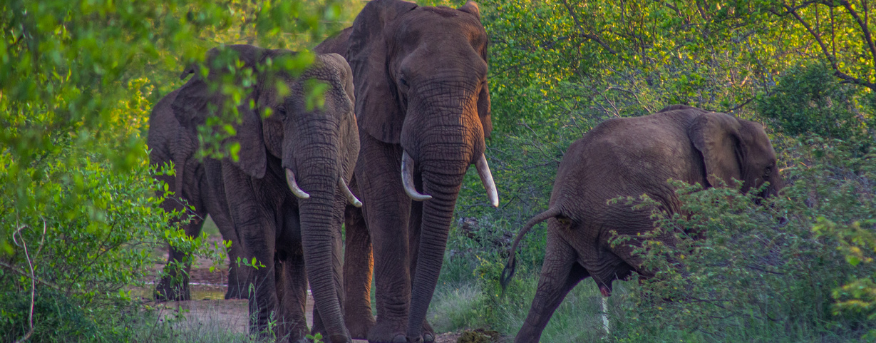
Photo by: Callum Evans
Of course, the high numbers of mammals in this region complete the picture. I was lucky to see dozens of species of mammals, from a Mauritian tomb bat to elephants.
The Greater Kruger National Park offers a great chance to see large numbers of mammals moving through a spacious and relatively continuous system.
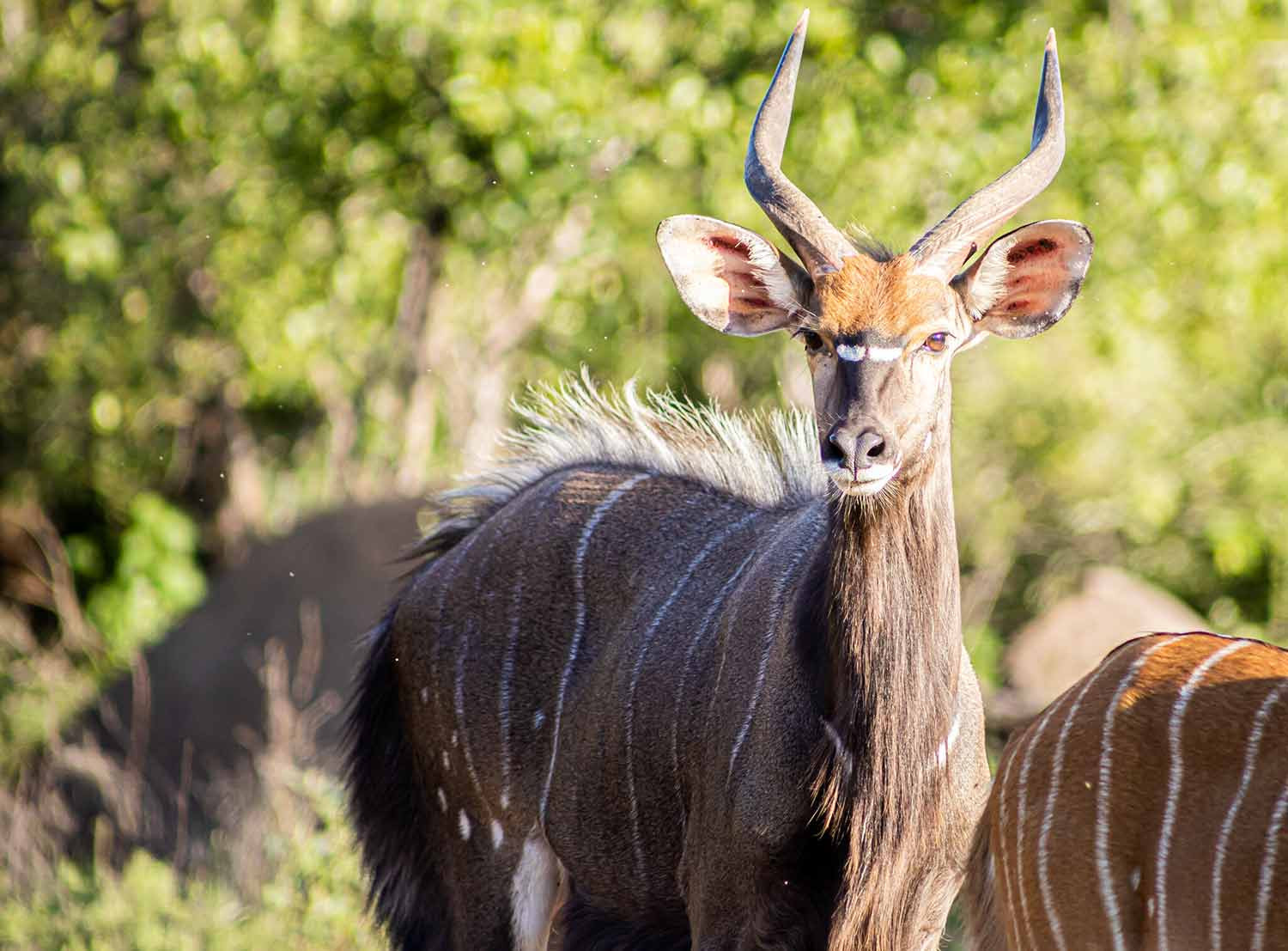
I saw large groups of grazing mammals in the open savannas, most notably zebra and wildebeest. Big herds of impala, as well as kudu, nyala, and waterbuck would often congregate along riverine areas. I also witnessed some rarer antelope species in the Lowveld, including sable, klipspringer and a Sharpe’s grysbok.
Wherever large numbers of herbivores occur, there will always be predators. The Kruger region has some of the highest densities of large predators, especially big cats, in Africa. I saw lions, cheetahs, and leopards on a number of occasions. I also had some really memorable sightings of spotted hyena and black-backed jackal, including seeing the young of both species.
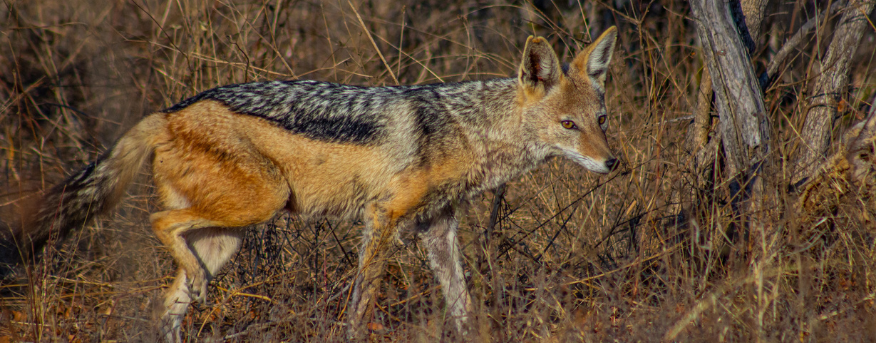
Photo by: Callum Evans
Some of the rarer nocturnal species I saw include African wild cat, honey badger, civet, porcupine and thick-tailed bushbaby. Perhaps my most memorable mammal sighting on the course was encountering a pack of African wild dogs in the Kruger and getting to spend over an hour and a half observing them.
These sightings were all incredibly special. I count myself very fortunate to have seen these interesting, beautiful and at times bizarre creatures while I was at Bushwise. It really was a special journey learning about the amazing biodiversity that the Lowveld holds.
Do you want to experience Lowveld wildlife like Callum has? Apply today to join one of our Bushwise Field Guide courses and kick-start your guiding career.