Tracks and Signs of the Bush
This blog about track and sign was written by Trevor Hinze, Bushwise Field Guide student.
4 min read
One of the certifications that Bushwise students can earn is CyberTracker Track & Sign and Trailing. This is also often a favourite experience for students, as it teaches you a whole new way of understanding animals!
In this blog, I’m going to be discussing a few things:
-
What are tracks and signs
-
Why are they important
-
How to differentiate between tracks
What are tracks and signs?
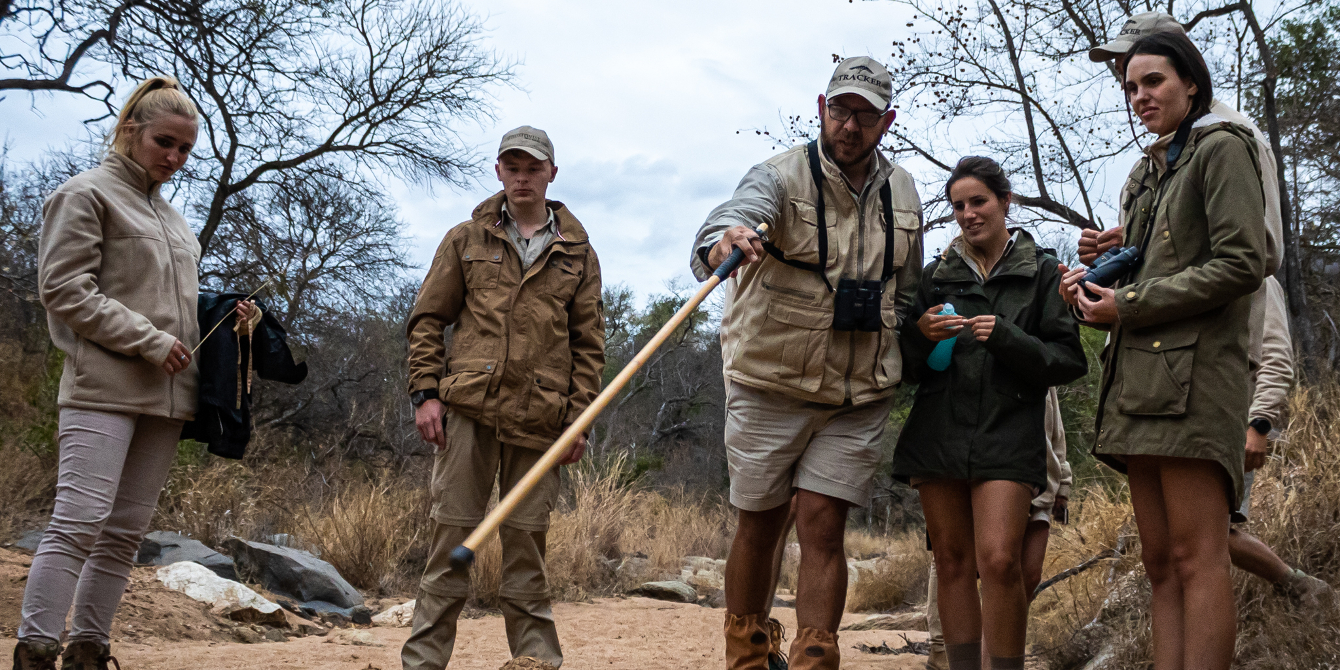
Track and sign is a whole different art form. It is what you see of an animal even when it’s not there. During our track and trailing assessments, Colin Patrick explained it in a very simple way:
Tracks are the footprints an animal leaves on the ground. This is usually our key feature in identifying different animals.
Signs is what an animal leaves behind but which involves an activity such as that elephant leaving behind broken branches. This leads us to our second point:
Signs tell us what the animal has been doing. An example would be an elephant feeding off a tree. As it feeds it leaves not just tracks, but also branches which it broke off during feeding. Of course the track is a dead giveaway, but what if that elephant was standing on hard ground or there are multiple other elephant tracks in the area. This is where the art form becomes handy.
Why are they important to us guides?
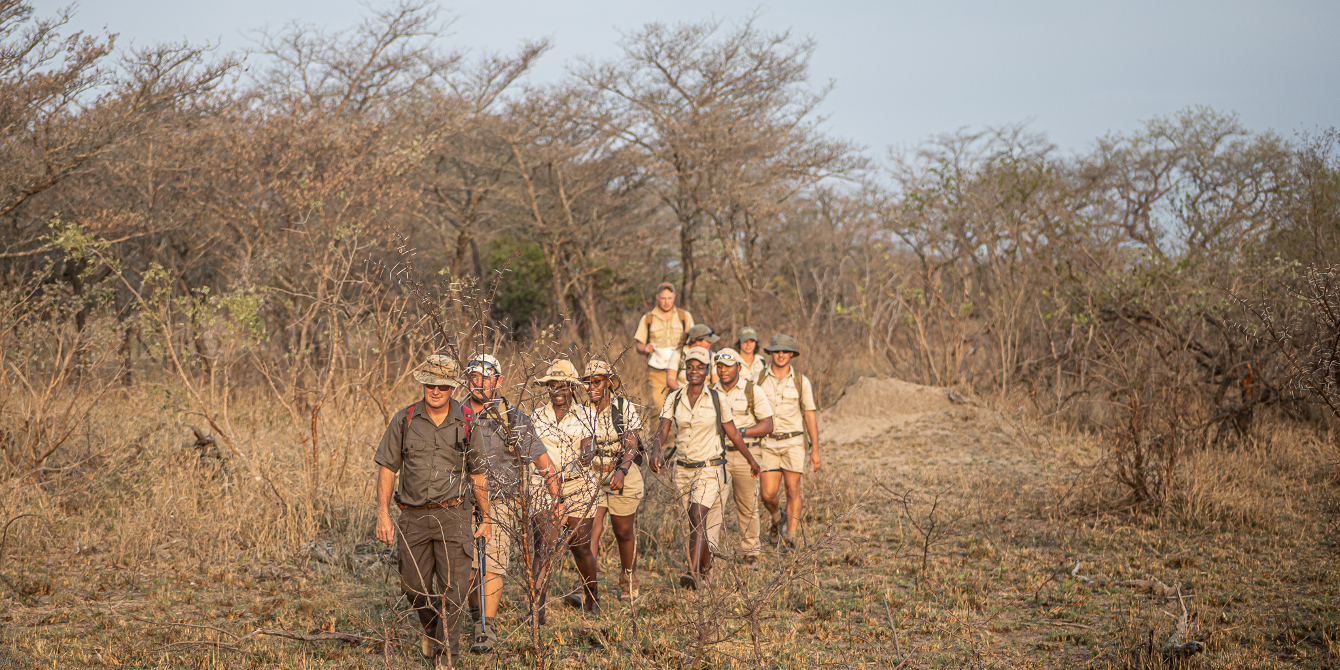
Wildlife tracking plays a vital role in guiding as it helps to let us find the animal we want, which is what we did during our trailing activities. Trailing is the process of following an animal’s tracks, to hopefully find the animal and observe it (from a safe distance).
Mind you, trailing is not easy, especially if that animal prefers to live in harsher or thicker environments. Then you might never see a perfectly clear track and you’ll have to start thinking like the animal in order to figure out which route it would have taken.
In our trailing week, our walked at least 2 hours every day in the hot summer sun as we trailed anything from elephant to lion. We found and bumped into a lot of elephants but never saw a rhino. At one stage we even trailed a herd of buffalo and came quite close to them – although they didn’t seem to be bothered at all by our presence. That was an experience that I will remember for a lifetime.
How do you differentiate between tracks?
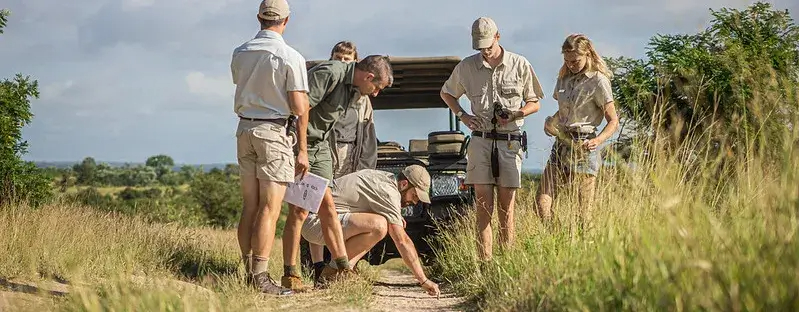
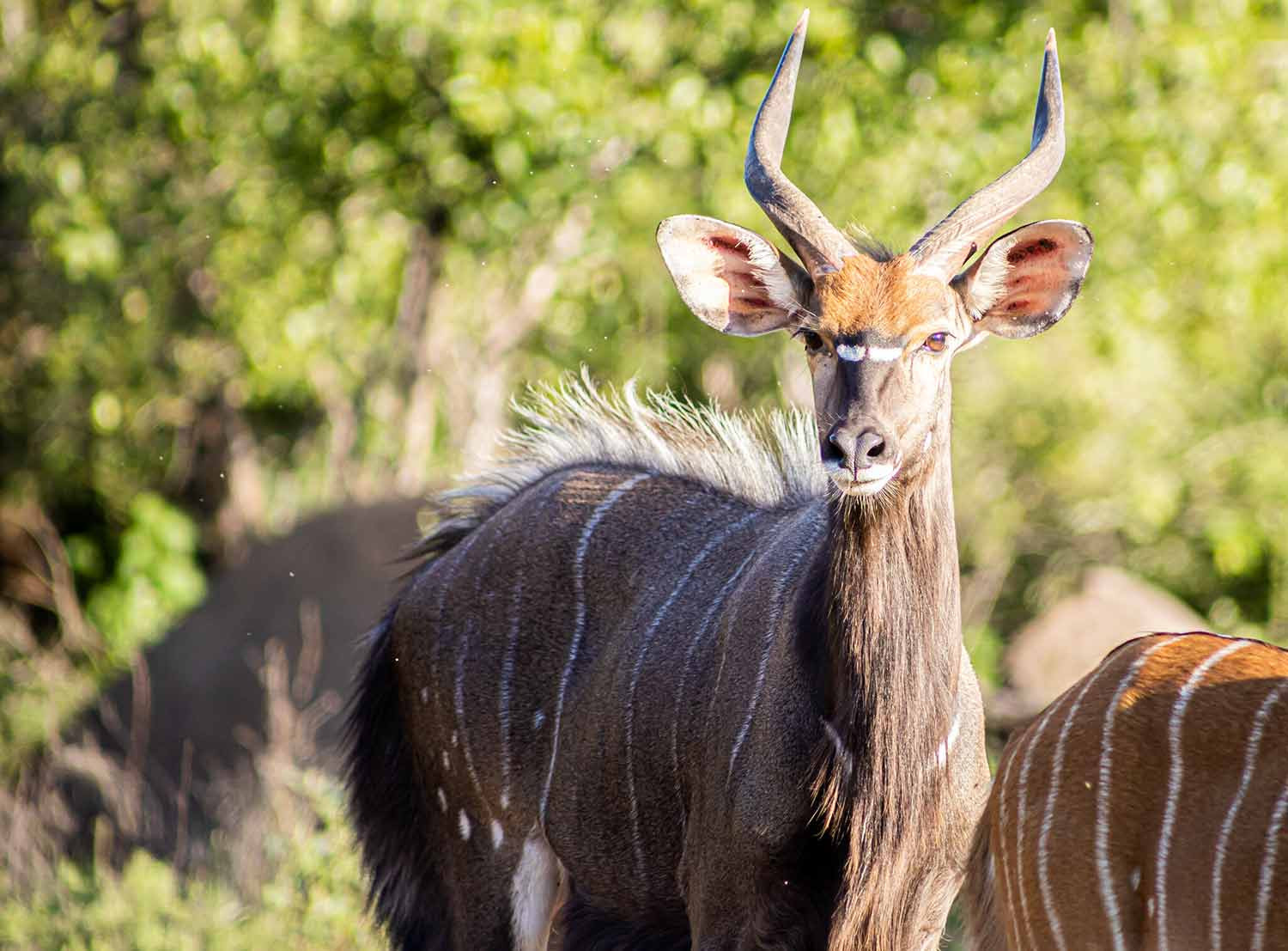
Sure there is a clear difference between an impala and an elephant, but there is only a slight difference from a kudu to a nyala. The tracks are very similar, but there are a few features that set them apart. This is why ‘identifying features’ are important to us, so that we can distinguish between the different animals that have similar tracks. It could be the X you can draw in a jackal track or the opposite sixes in the blue wildebeest track.
Some animals are grouped together based on they’re foot structure. This is important because of the number of different animals we have in southern Africa. Animals are adapted to their environments, so they will have different physical attributes depending on where they live. For example, their foot structures differ to better their chances of survival in the biome in which they reside.
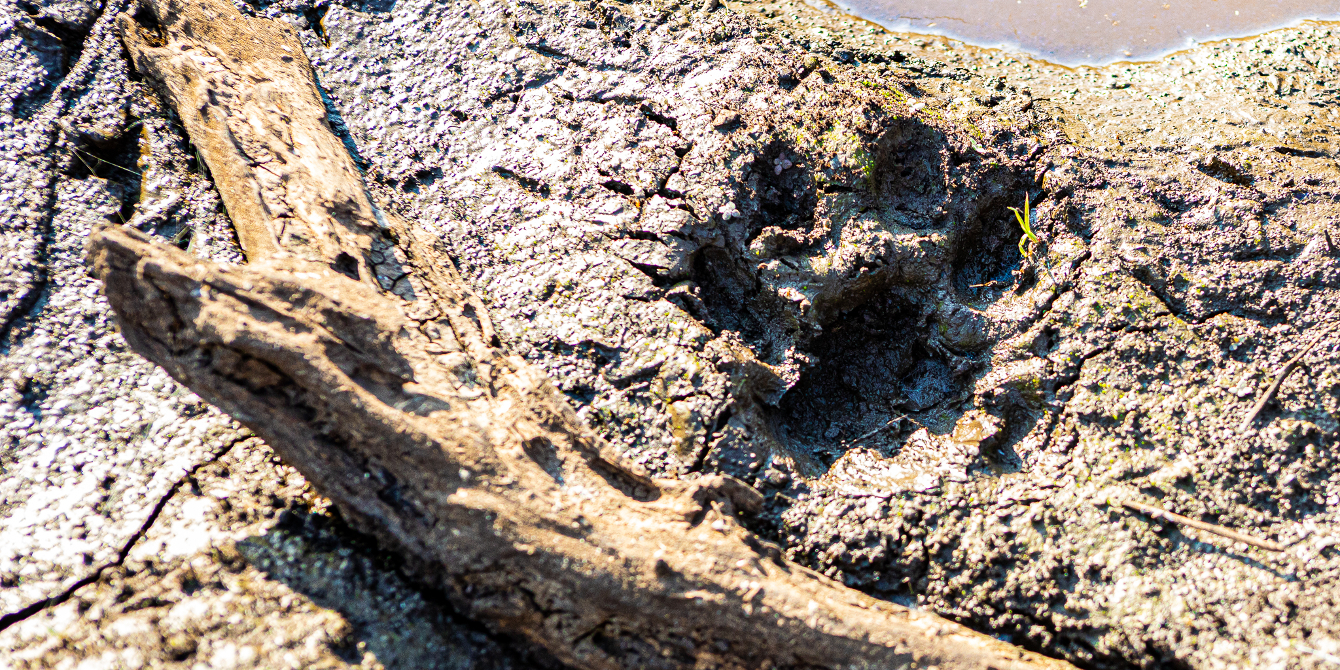
Take a lion’s paw, which is adapted for the lion to walk as quietly as possible when stalking so that it can successfully hunt. Another example is the blue wildebeest, whose foot structure is adapted for long distance running and speed so that it can endure the great migration which happens in the Serengeti. Some animals such as vervet monkeys and bush babies have specially designed hands and fingers for climbing and clinging onto trees.
It’s not just mammals that have different foot structures. Birds and reptiles – except for snakes of course – have foot structures to help them survive. Eagles are predatory birds and therefore have long talons to help them catch prey. Geckos can hang upside down on the ceiling thanks to their foot structure.
I received an 89% for our track and sign assessment, which earned me a level 2 track and sign certificate. This will probably not be the last assessment I will do, because I was a mere 1% away from a level 3 certificate!
If you’re interested in animal track and sign, a Bushwise course is an excellent way to learn more and earn your certification. Apply today!
#wildlife #bushwise #fieldguide #trailsguide #Exam #training #animals #tracks #apprenticefieldguide #fieldguiding #tracking #endangeredspecies #trackandsign #Assessments #gamedrive #guiding #fieldguidecourse #fieldguides