Animal tracks and tracking
This blog about tracking animals was written by Francois Theron. With years of guiding experience, Francois shares his knowledge on tracks and tracking in the bush.
There are hundreds of species of endangered animals living across Africa, and tracking wildlife and monitoring endangered species are essential to their conservation.
Tracking animals is like learning to read. First you start with your ABCs, then you work your way up to simple sentences, then paragraphs and, finally, books. With more and more practice, you can read difficult books. And the same goes for tracking.
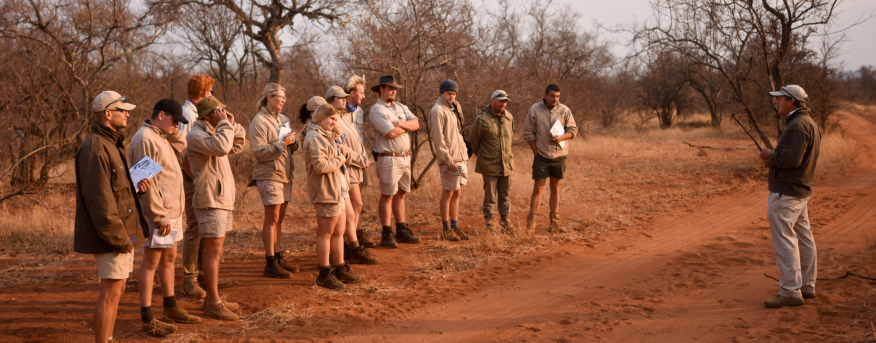
A track, print, or geological mark is made and then slowly worn down, or built upon, by the forces of natural erosion and gravity. In wildlife tracking, the first thing to learn is knowing where to look.
Earth is like a manuscript of tracks that gets added to every day. Table Mountain is a geological track, the Limpopo River (also known as the Crocodile River) is a track, and so is the Drakensberg escarpment.
A track is a window into the past of an animal’s life. Imagine the ground as if it were a manuscript of the animal’s movements through life. Learning to read these tracks will help you understand how animals move within an area, migrate, and evolve over time.
Parts of a track
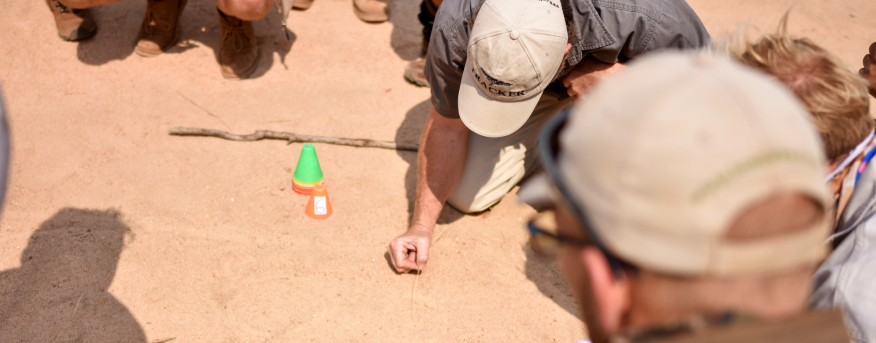
When a track is made, an organism’s heel slides into the ground, registers and pulls out. No track will be straight and level. There’s always some angled component either from the foot pressing down or pulling out.
The softer the soil, the greater the slope of the track. This affects how we measure a track and helps us tell the difference between a lion track and a leopard track for example.
Lions and leopards both have one large pad with three clear lobes under their paws. Another telltale sign is that cats also have retractable claws. Once a track has been identified as belonging to either a lion or leopard, the simplest way to tell which animal it was left by is by its size.
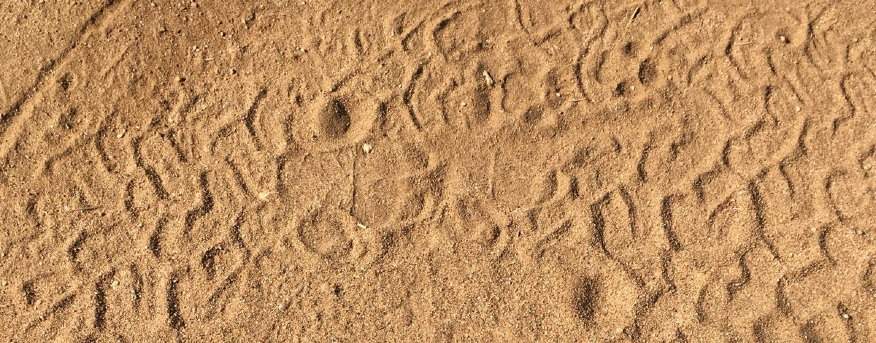
The weight and sex of the animal plays an important role here. An adult male lion can reach between 150 and 260 kilograms, making it the heaviest of Africa’s cats. They also have large and wide front paws. A male lion’s front paw track can measure up to 14.5 centimetres in length, while a female’s track will measure around 13 centimetres.
An adult male leopard weighs around 30 to 70 kilograms; a substantial difference to its bulkier feline cousin. This gives leopards the agility necessary to climb and pull prey up in trees. A male leopard’s tracks are longer and wider measuring up to nine centimetres long on the back foot, while a female’s back foot track will be about eight centimetres long.
Measuring a track
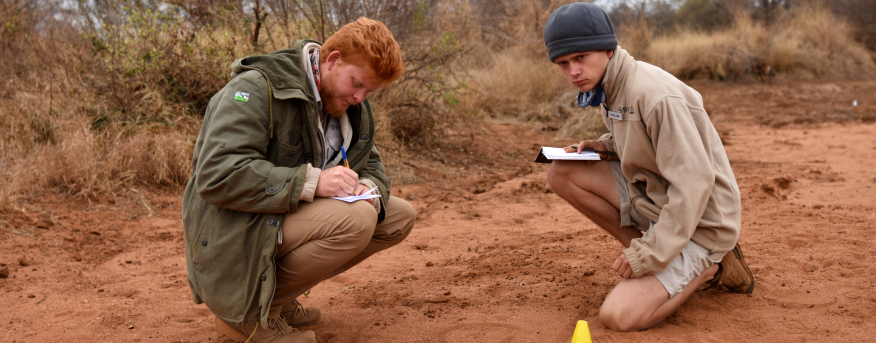
You will need to measure the length and width of all four tracks (two in humans). When measuring animal tracks, the readings between tracks are measured from toe to toe because animals walk with their toes first. In humans, we measure tracks from heel to heel because we land heel first.
1) Establish the line of travel
This can be done by the eye if the tracks are clear, or by placing and connecting strings along the track.
2) Length of the track
Measure the length of the track.
3) Width
Measure the widest part of the track.
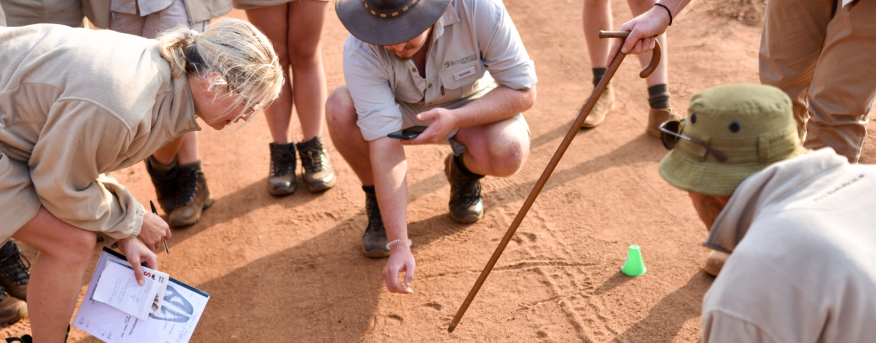
4) Stride
This is measured from the heel of one foot to the heel of the other foot.
5) Straddle
If you draw a line of travel between the left and right heels, the distance between them is the straddle.
6) Pitch
The pitch is the degree to which the foot angles out from the line of travel. At the widest point of the track, draw a line bisecting the track along its axis. The distance from where the line exits the front of the foot to the heel line is the overall pitch.
7) Overall stride
This is measured from heel to heel. Thus, there is a left overall stride and a right overall stride. Comparing these two can help you determine the orientation of the animal.
8) Determining orientation
The dominant side of the animal makes a short step (punch), while the non-dominant side makes a long step (feeler). So if you try walking blindfolded, you’ll circulate towards your dominant side.
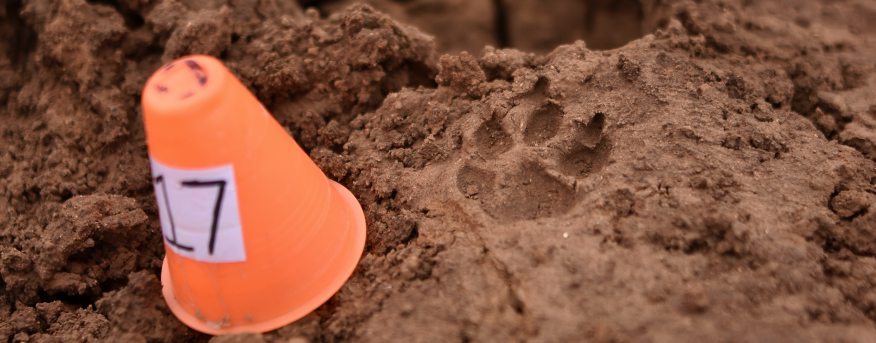
Classification of tracks
-
Clear print: When you can see the track clearly in soft soil, with all toes visible.
-
Pattern classification: When there is no clear print, you must identify the track by its general shape and size.
-
Track card: You can use a basic track card to help identify animals.
Bonus: Bird tracking
Here are some useful hints to keep in mind when identifying bird tracks:
-
Ground birds: Spend most of their time on the ground and show a walking gait.
-
Perching birds: Spend most of their time in trees – shows a hopping gait.
-
Mix: If a track shows both hopping and walking gaits, it probably belongs to a bird that splits its time between trees and the ground, like a crow.
Aging Tracks
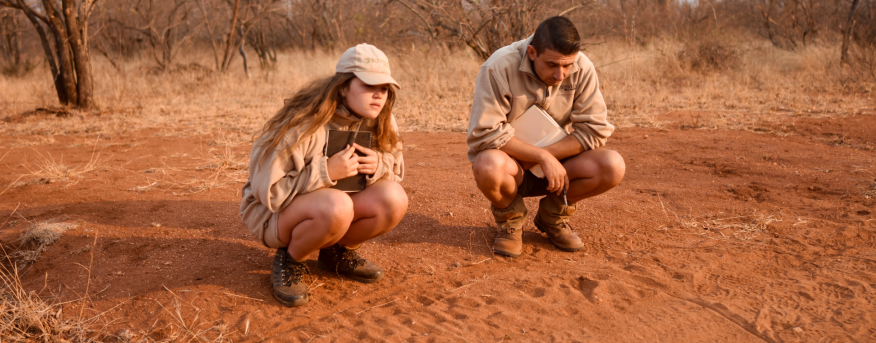
The single biggest cause of track degradation (and thereby aging) is weather fluctuation. Gravity is also a major contributing factor, as well as the type of soil the track was made on.
The only way to learn how to calculate the age of a track is to observe how a track degrades over time, given the soil conditions. Different types of soils are classified between one and ten, with soft sand being one and hard clay being ten (in other words, a scale of soft to hard soil).
You must estimate the soil classification first. Then, keep an accurate record of weather changes while observing a track over time. Weather conditions to be aware of include temperature, humidity, wind, precipitation and hours of direct sunlight on the tracks.
Are you ready to test your track knowledge? Join us in the bush and help us identify animals in Africa.